
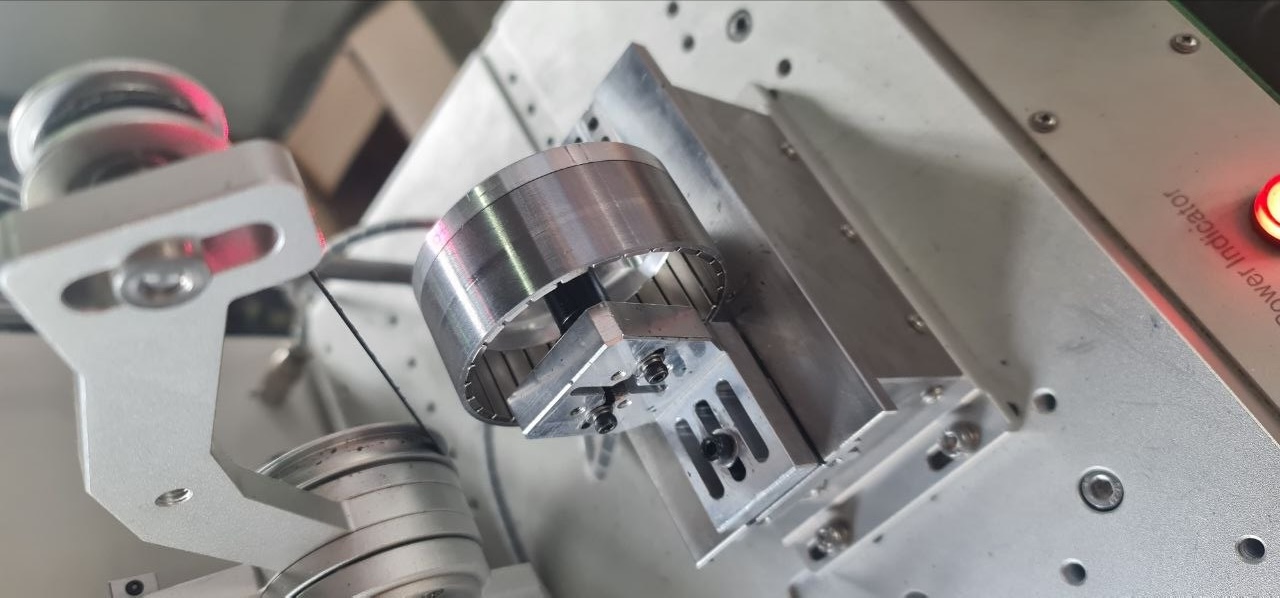
New from VSV Motors
Propulsion systems for heavy unmanned platforms must deliver the required thrust while remaining compatible with the power supply, propeller group, and control system. We developed the VSV6012 brushless electric motor specifically for these demanding applications.
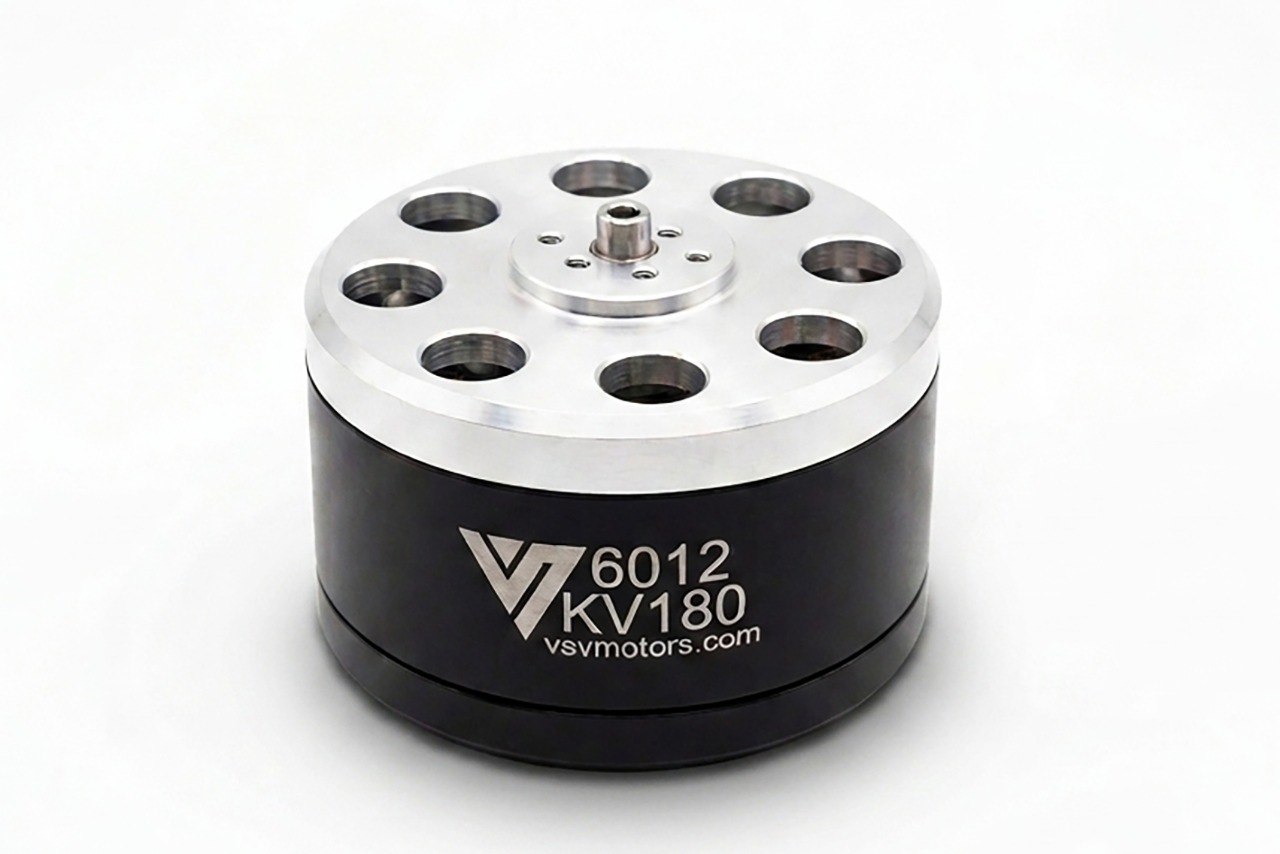
The motor is designed for heavy-lift drones and vertical take-off and landing aircraft. The standard version is rated at 180 KV, operates on a 12S Li-Po power supply at 50.4 V, delivers up to 2,510 W of power, and generates up to 8,452 g of thrust. The recommended propeller diameter is 16–18 inches.
VSV6012 in a Heavy UAV Propulsion System
A motor’s specifications should be considered as an interconnected set rather than in isolation. The KV rating defines the voltage-to-speed relationship, the operating voltage determines the power-system parameters, and the permissible current and power must be considered when selecting the ESC and other power components.
The VSV6012 has a maximum continuous current rating of 50.2 A. Together with its 12S operating voltage and recommended propellers, this provides the baseline parameters for designing a complete motor-and-propeller system.
VSV6012 Design and Construction
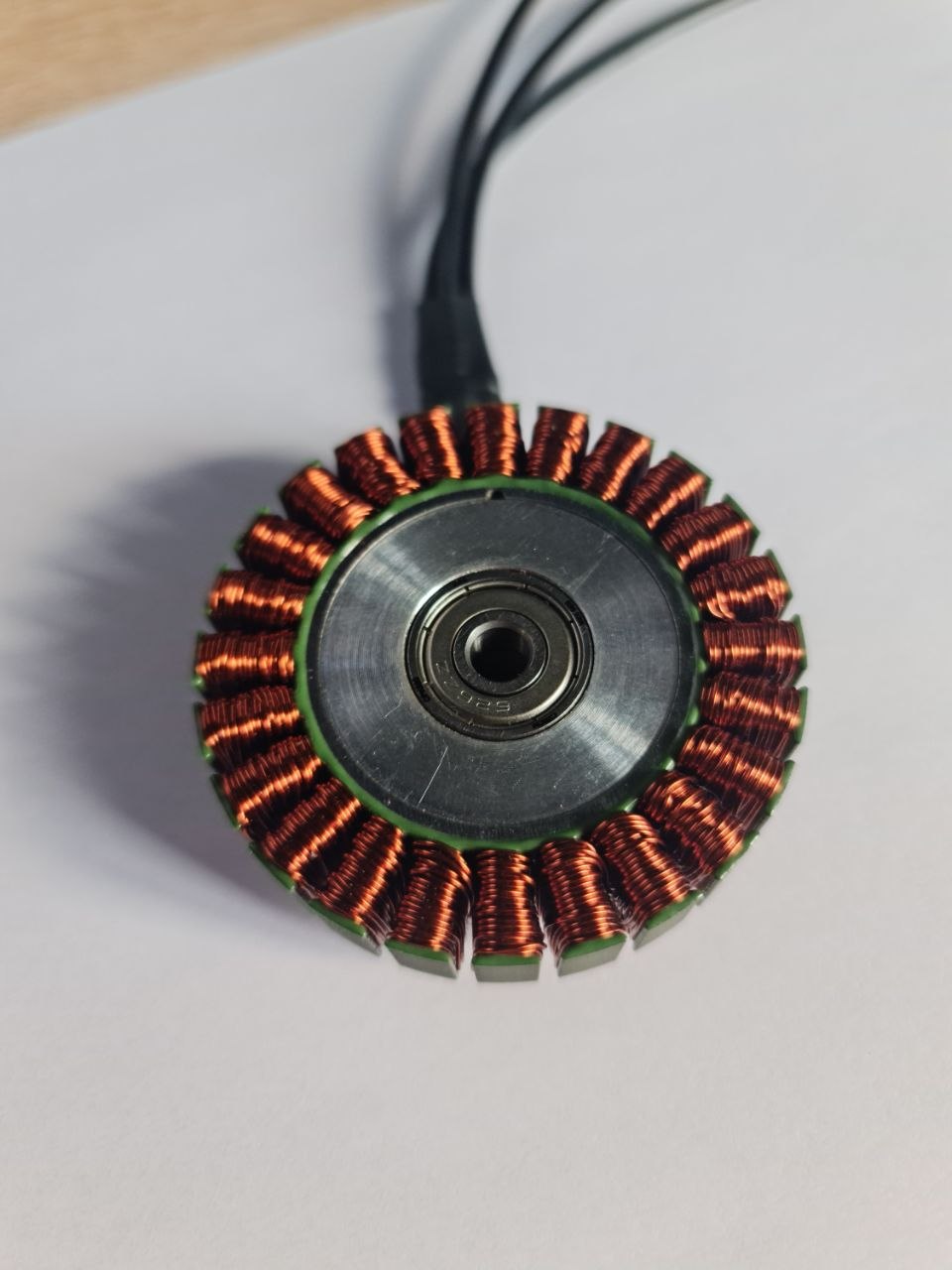
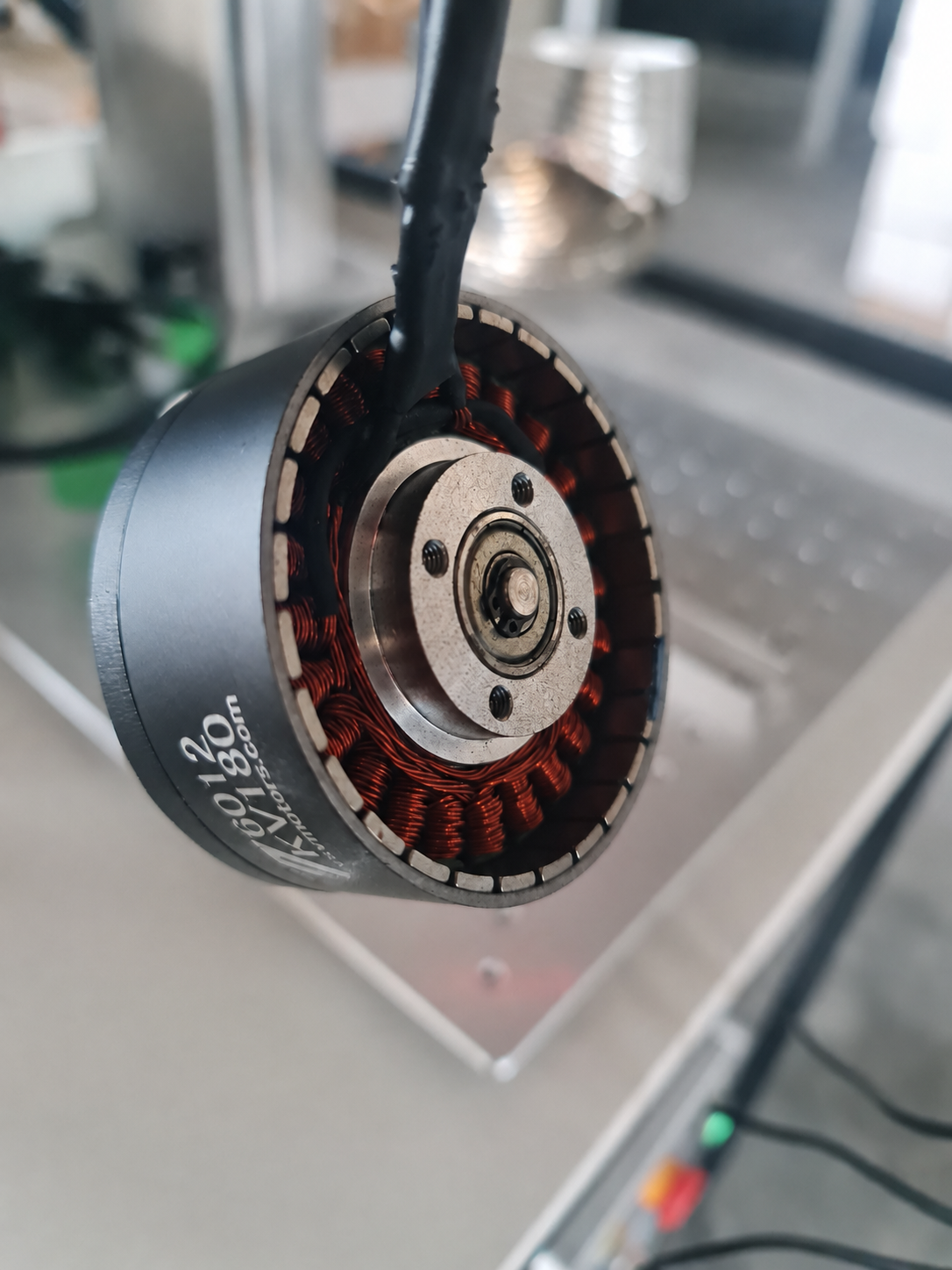
The motor uses a 24N28P configuration, with 24 stator teeth and 28 magnets. Its stator measures 60 mm in diameter and 12 mm in height and is manufactured from 0.2 mm silicon-steel laminations.
The design incorporates N52H arc magnets, a stainless-steel shaft, an aluminium-alloy rotor cover and support, and 626ZZ bearings. The rotor is dynamically balanced to a residual imbalance of no more than 8 mg. The motor weighs 398 g, including its lead wires.
Technical Specifications
| KV rating | 180 |
|---|---|
| Operating voltage | 50.4 V (12S Li-Po) |
| Maximum power | 2,510 W |
| Maximum continuous current | 50.2 A |
| No-load current (at 10 V) | 0.9 A |
| Phase-to-phase winding resistance | 86 mΩ |
| Configuration | 24N28P |
| Stator diameter × height | 60 × 12 mm |
| Weight including lead wires | 398 g |
| Stator material | 0.2 mm silicon steel |
| Shaft material | Stainless steel |
| Rotor cover and support material | Aluminium alloy |
| Motor lead wires | Silicone-insulated, AWG 16, 200 °C, 600 V; length 600 mm |
| Bearings | 626ZZ |
| Magnets | Arc magnets, N52H |
| Dynamic rotor balancing | Residual imbalance not exceeding 8 mg |
| Hall sensors (optional) | 3 × Honeywell SS41F, 120° electrical spacing |
| Hall-sensor board wires | Silicone-insulated, AWG 24; length 400 mm |
The specifications shown apply to the standard 180 KV version. The configuration can be customised to meet specific project requirements.
Customisation for Specific Projects
The VSV6012 can be manufactured with alternative KV ratings to meet customer requirements. A version with integrated Hall sensors is also available.
This allows the motor to be adapted to the parameters of a specific propulsion system, including its supply voltage, motor-and-propeller configuration, and control-system requirements.
We developed the VSV6012 as an alternative to T-Motor V-series motors for heavy UAV and VTOL platforms, where motor selection forms part of the engineering calculation for the complete propulsion system.
Conclusion
The VSV6012 is a specialised brushless electric motor for heavy unmanned systems in which power and thrust are important, but reliable operation of the complete propulsion system is equally critical.
Its robust construction, compatibility with large propellers, and ability to tailor its specifications to individual project requirements make the VSV6012 a versatile foundation for integration into heavy UAV and VTOL platforms.
For us, this model represents the continued development of our product line towards more powerful and specialised solutions for modern unmanned systems.